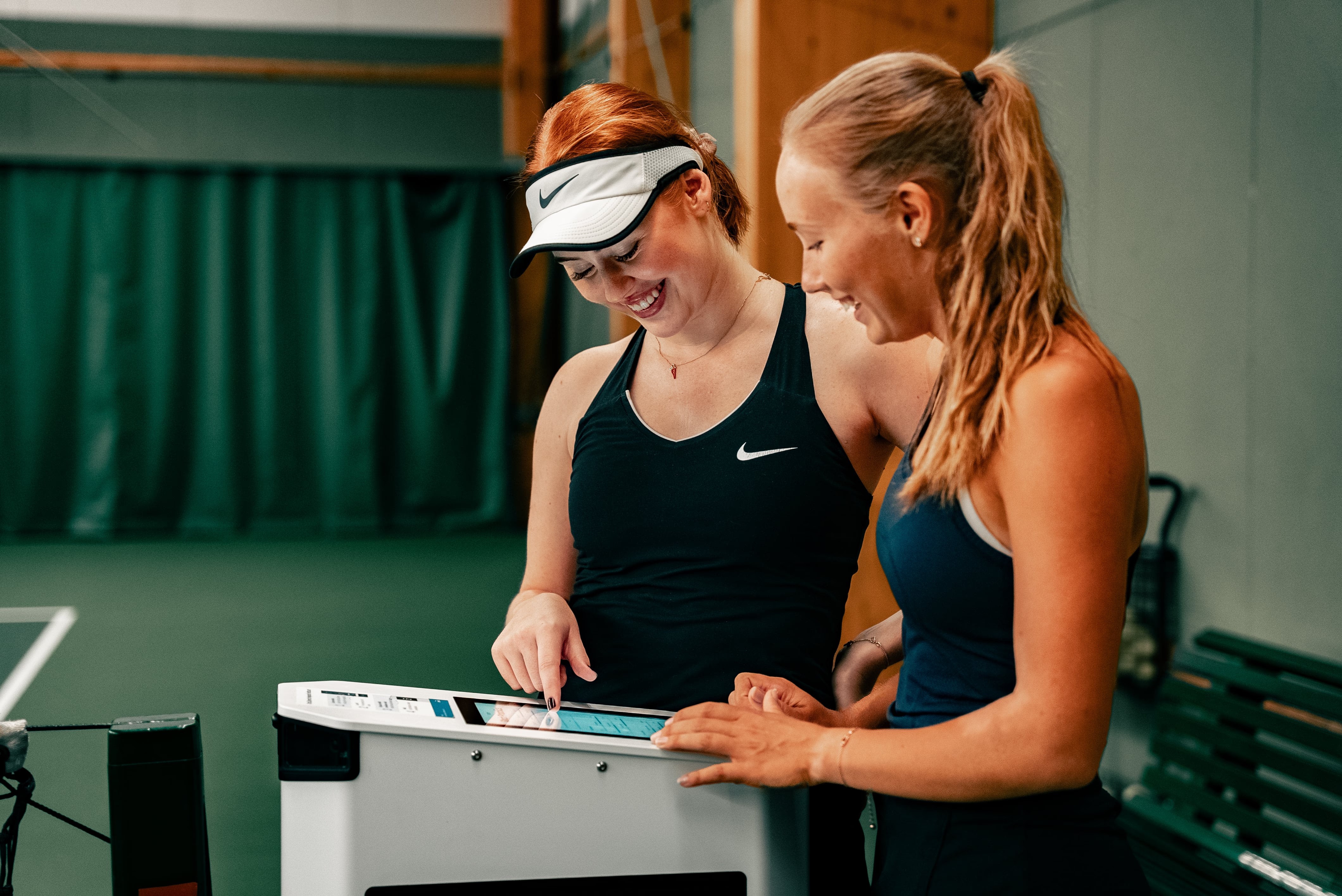
Real-time tennis statistics transform the way players train by bridging the gap between perception and reality, offering immediate insights that allow for on-court adjustments while the session is still active. Access to instant data regarding shot placement, speed, and consistency empowers players and coaches to correct technical errors in the moment rather than analyzing them days later, significantly accelerating the learning curve and decision-making process.
Tennis is a sport of rapidly fleeting moments. A split-second decision determines the outcome of a point, and often, our memory of those moments is clouded by the intensity of the match. You might walk off the court feeling that your backhand let you down, only for the data to reveal that your backhand was actually your most consistent shot, but your court positioning was too defensive. This disconnect between what we feel and what actually happens is where potential progress is often lost.
For decades, this level of granular analysis was a luxury reserved exclusively for professional tours. Players at the club level relied on intuition or the subjective memory of a coach. Today, the integration of Tennis Court technology has democratized access to these professional-grade analytics. By bringing data directly to the courtside, players can now harness the power of truth. Instead of guessing why a specific drill isn't working, you can look at the numbers, see the reality, and make the necessary correction immediately. This shift from retrospective analysis to real-time adaptation is not just about tracking numbers; it is about making every minute on the court smarter, fairer, and more effective.
Moving Beyond the Traditional Post-Match Debrief
For generations, the standard approach to tennis improvement relied heavily on retrospective analysis. A player would finish a match, perhaps jot down a few notes, or discuss the key moments with a coach hours or even days later. While valuable, this traditional method suffers from a critical flaw: the fading accuracy of human memory. By the time you sit down to analyze the performance, the visceral feeling of the racket in your hand and the specific context of those crucial points have often evaporated.
The "Recency Bias" in Tennis
Tennis is an emotionally charged sport, and our brains are wired to remember the peaks and valleys rather than the steady stream of data in between. We tend to overemphasize the spectacular winner hit at 40-15 and conveniently forget the three unforced errors that cost us the previous game. This psychological phenomenon, often called recency bias, creates a distorted view of reality.
Without objective data to counter these feelings, training plans are often built on false assumptions. You might spend hours practicing your serve because you felt it was "off," when in reality, your serve percentage was high, but your first volley placement was the actual culprit. Real-time statistics act as a mirror, reflecting the truth of the match instantly so you can address the root cause, not just the symptom.
Closing the Feedback Loop
The most effective learning happens when the feedback is immediate. This is where the transition to Smart Tennis Court technology fundamentally alters player development. When you can walk to the kiosk at the side of the court during a changeover and see exactly where your balls are landing, you bridge the gap between proprioception—how the shot feels—and the actual result.
This immediate verification allows for "micro-adjustments" that are impossible to make retrospectively:
Course Correction: If the data shows 80% of your returns are landing short, you can consciously adjust your target depth for the next set.
Tactical Validation: Confirming that your strategy to target the opponent's backhand is actually working, encouraging you to stick to the game plan.
Conflict Resolution: Eliminating debates between player and coach about what "just happened" by looking at the objective facts together.
By shortening the time between action and analysis, we prevent bad habits from taking root. Instead of practicing a flawed mechanic for an entire week before a coach catches it on video, the data flags the inconsistency immediately, allowing the player to calibrate their game on the fly. This is the essence of modern training: converting complex data into simple, actionable insights when they matter most.
Identifying Tactical Pivot Points in Real Time
Tennis matches are rarely static; they are living, breathing battles where momentum shifts and opponents adapt. The ability to recognize these shifts as they happen—rather than after the handshake—is often what separates the victor from the defeated. Real-time statistics act as a high-precision navigation system, alerting you when you have drifted off course so you can steer back toward a winning strategy before the set slips away.
Consider the common scenario where a player feels they are striking the ball well but still losing games. Without data, frustration sets in. With Zenniz Court technology, a quick glance at the courtside screen during a changeover can reveal the hidden narrative. Perhaps the data shows that while your winners are spectacular, you are losing 80% of the points that extend beyond nine shots. This is a tactical pivot point. The numbers are telling you clearly: stop grinding. You need to shorten the points, approach the net, or inject pace earlier. This objective insight allows you to switch strategies with confidence, knowing the adjustment is based on fact, not panic.
Another area where immediate feedback is invaluable is in breaking subconscious patterns. Under pressure, every tennis player reverts to their comfort zone. You might believe you are mixing up your serve placement, but the heat map might reveal that you have hit your last six serves to the exact same spot on the "T." Your opponent has likely picked up on this, even if you haven't. Seeing this predictability visualized instantly empowers you to consciously change direction on the next crucial point, regaining the element of surprise.
Key Metrics to Check During Changeovers
When you have only ninety seconds to digest information, you need to focus on the metrics that offer the highest return on intelligence. Scanning these specific data points can provide immediate clarity:
Serve Placement & Win %: Are you winning free points on the wide serve, or is the opponent reading it? Identify which spot is your current "money serve."
Net Clearance: If your unforced error count is climbing, check your net height. Often, errors stem from playing too flat; adding margin with more spin can stabilize your game instantly.
Shot Depth: Are your balls landing past the service line? If the stats show your average shot depth is shallow, you know your primary goal for the next two games is simply to hit deeper, pushing your opponent back.
By treating the changeover as a strategic briefing rather than just a water break, you elevate your mental game. You return to the baseline not just refreshed, but armed with a specific, data-backed plan to dismantle your opponent's game.
The Argument Against: Can Too Much Data Paralyze Performance?
There is a valid concern among tennis purists and coaches that introducing screens and statistics to the court might disrupt the natural flow of the game. Tennis is, after all, a sport of rhythm and instinct. The fear is "analysis paralysis"—a state where a player becomes so consumed by the mechanics and the numbers that they lose their intuitive feel for the ball. It is a reasonable question: does checking your unforced error count during a changeover help you focus, or does it just make you more anxious about missing?
Finding the Balance Between Flow and Facts
The answer lies not in rejecting data, but in how we consume it. The goal of Real-time Tracking is not to turn players into robots who calculate probabilities before every swing. Instead, it is about selective attention. Just as a driver doesn't stare at the speedometer constantly but glances at it occasionally to ensure safety, a tennis player should use statistics as a periodic check-in.
To prevent data overload, it is crucial to approach on-court analytics with a disciplined mindset. The technology works best when it supports your game plan rather than dictating every move. Here is how top players integrate data without losing their rhythm:
Focus on One Metric at a Time: Instead of trying to fix your serve, return, and net game simultaneously, pick one key stat to monitor for a set (e.g., "First Serve Percentage").
Respect the Rituals: Use the data only during designated breaks, like changeovers or set breaks. Preserve the flow of play between points.
Confirmation, Not confusion: Use the numbers to confirm what you already suspect. If you feel you are hitting short, let the data simply nod "yes" so you can fix it and move on.
Curated Insights Over Raw Numbers
This challenge is exactly why the design of the interface matters. A spreadsheet of raw numbers is overwhelming; a visual map of where your winners are landing is intuitive. We believe that technology should do the heavy lifting of processing the data so the player receives only the clear, actionable takeaways. When the information is presented simply—using clear visuals like heat maps or bold percentages—it bypasses the analytical part of the brain and speaks directly to the athletic mind.
Ultimately, the right amount of data actually reduces mental clutter. Uncertainty causes anxiety. When you are unsure why you are losing, your mind races with a dozen different theories. When you see the hard data—that your opponent is simply dominating the short rallies—the noise quiets down. You have a clear problem, and that means you can find a clear solution. In this way, statistics don't paralyze performance; they liberate the player to focus on the one thing that truly matters.
Leveraging Court Technology for Granular Insights
While the concept of tracking stats is not new—parents with clipboards have been doing it for decades—the depth and accuracy provided by modern Court systems are in a different league entirely. Manual charting is prone to human error and bias, often missing the subtle details that define high-level play. Technology captures the full picture, recording every ball strike with precision to reveal the granular details that the human eye simply cannot process in real time.
The Power of Video Integration
Numbers tell you what happened, but video tells you why. The true magic happens when hard data is synchronized with video footage. Imagine looking at your stats and seeing that you made five unforced errors on your forehand volley. On a standard stat sheet, that is just a depressing number. With an integrated system, you can tap that number and instantly watch a video reel of those specific five shots.
This feature transforms abstract data into a visual lesson. You might instantly spot that on all five errors, your racquet preparation was late, or your feet were planted flat. This visual confirmation cements the learning in a way that words or numbers alone never could. It turns the court into a classroom where the lesson is completely personalized to your performance.
Beyond the Box Score: Advanced Metrics
Technology goes beyond the basic winners and errors to track the hidden mechanics of the game. These advanced metrics provide a roadmap for technical improvement:
Ball Speed and Spin: Understanding not just where the ball landed, but how heavy the shot was. Are you generating enough RPMs (revolutions per minute) to keep the ball in play while hitting with pace?
Impact Point Distribution: Seeing exactly where on the string bed you are making contact. Consistently hitting off-center? It might be time to look at your footwork or eye-tracking.
Court Coverage Heat Maps: Visualizing how much ground you are covering compared to your opponent. Are you controlling the center, or are you being run ragged side-to-side?
By harnessing these tools, players and coaches can build training regimens that are surgically precise. Instead of generic "hit more balls" advice, practice becomes about "increasing average forehand speed by 5 mph" or "improving contact point consistency." This is how technology elevates the sport—by giving every player, regardless of level, the clarity needed to reach their full potential.